

Tissue-Repair Research Peptides
Repair and regeneration reference peptides, including BPC-157, TB-500 and documented blends.
18+ · Research use only WA dispatch
Find a product.
5 products
Browse categoriesTissue repair
-
Research blend
 Tissue repair
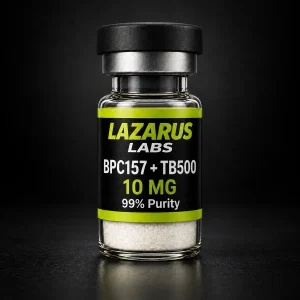
BPC157 + TB500
BPC157 + TB500 lyophilised research blend in two strengths: 10mg (5mg + 5mg) or 20mg (10mg + 10mg) per vial. Select your strength to view its price and availability. For laboratory research only.
10MG · 20MG Price range: $104.50 through $185.00 incl. GSTChoose options -
Recovery research
-
Metabolic research
 Tissue repair
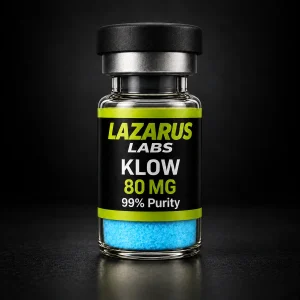
KLOW 80MG
Lazarus Labs KLOW 80MG is a premium lyophilised vial with ≥99% purity and third-party COA support.Dispatched from Western Australia within 24 hours. Free express shipping over $300 with AusPost tracking.
-
Metabolic research
 Tissue repair
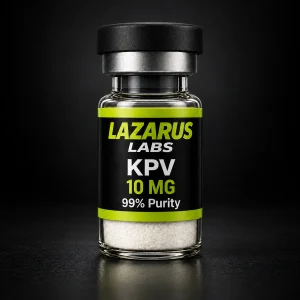
KPV 10MG
Lazarus Labs KPV 10MG is a premium lyophilised vial with ≥99% purity and third-party COA support.Dispatched from Western Australia within 24 hours. Free express shipping over $300 with AusPost tracking.
-
Recovery research
 Tissue repair
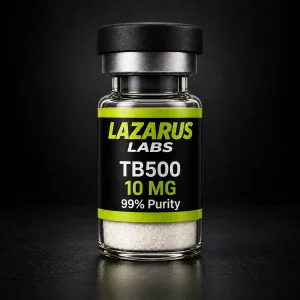
TB500 10MG
Lazarus Labs TB500 10MG is a premium lyophilised vial with ≥99% purity and third-party COA support.Dispatched from Western Australia within 24 hours. Free express shipping over $300 with AusPost tracking.
Category overviewAbout this collection
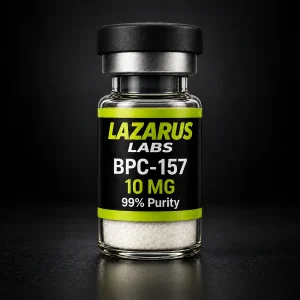
This category groups peptides studied in tissue-repair, regeneration and angiogenesis research – including BPC-157 (a 15-amino-acid pentadecapeptide whose sequence derives from a gastric protein), TB-500 (a synthetic peptide related to thymosin beta-4), the C-terminal alpha-MSH fragment KPV, and multi-peptide research blends. They are characterised in the scientific literature as reference compounds for investigating growth-factor and repair pathways in study models. Supplied for laboratory research only; 99%+ purity; batch COA; ships from Western Australia.
How tissue-repair peptides are studied. The published record for this class is dominated by preclinical work: cell-culture assays of migration, adhesion and cytoskeletal dynamics, and animal models with defined injury endpoints. Mechanistic readouts include growth-factor signalling for BPC-157, monomeric-actin binding for the beta-thymosin family, and peptide-transporter (PepT1) uptake for the alpha-MSH fragment KPV. Results in these models describe pathways under laboratory conditions, not outcomes in humans.
Where to start in this category. What is BPC-157?, What is TB-500? and What is KPV? summarise each compound’s classification and primary literature, and What is the KLOW blend? explains the 80 mg four-component vial. Every batch ships with an independent Janoshik Analytical Certificate of Analysis.